X

TXTWRK


PERSONAL
LinkingLinking
FollowingFollowing
ConnectionsConnections
MessagesMessages
NotificationsNotifications
DISCOVER
SearchSearch
ReelsReels
CalendarCalendar
MapMaps
Work
NotesNotes
NeedsNeeds
ContributionsContributions
TimetableTimetable
IntelIntel
To DosTo Dos
ChecklistsChecklists
SavesSaves
ScrapboardScrapboard
LinksLinks
Monetisation
CoinsCoins
AdvertisingAdvertising
SubscriptionSubscription
DonationDonation
Log BookLog Book
Organisation
BusinessBusiness
AddressesAddresses
InvestorInvestor
FinancialsFinancials
Quarterly'sQuarterly's
SharesShares
Server
ServerServer
WorkspaceWorkspace
Code PlaygroundPlayground
Learn More
AboutAbout
AIDAID
DataData
DevDev
Web ImpressionsImpressions
ToolsTools
EducationEducation
SafetySafety
ReaderReader
My Content
Profile Image
Login

My Addresses

×
Addresses
+
Character Profiles
+
Info & Cover
+
Timetables
+
Favorited by... X
Link Clicks X
All comments... X
More | 1/2

TheUKparty Verified Website

@UnitedKingdom

City of Derby, Derby, Derbyshire, East Midlands, England, United Kingdom, Europe

Official support page for political transparency in the United Kingdom, for all citizens to have a voice and play a role in our country’s development & democratic processes. Setup & ran by @ImSunnyClaire, the founder of @TXTWRK

Become Britain's Voice & Future @UnitedKingdom:Checklists! where your comments are remembered in humanities history forever, only at TXTWRK


Community
21/10/2024
Learn more about me 𓇻
▦ Photos
▦ Videos
▦ Covers
Active: 1 days ago
Safety


LOCAL PULSE

Profile Signals

Loading…
Loading profile signal…

Loading latest public Local Pulse signal…

Financials Financials
Quarterlys Quarterlys
Shares Shares
Notes Notes
Needs Needs
Contributions Contributions
Timetable Timetable
Intel Intel
To Dos To Dos
Notes Reel


Happening & Service
Happening Now and service updates connected to this profile


Connections
These are pages I added


Intel Pinned

Transparency of Operations
TheUKparty.com · Civic Voice & Start‑Up Utilisation Notice
Purpose
TheUKparty.com and its connected channels exist to help people have a real civic voice. These platforms allow individuals to give feedback about their streets, local organisations, community issues, and daily experiences. The goal is to make public input simple, open, and accessible to everyone.
Utilisation
We encourage the public, community groups, and emerging UK start‑ups to utilise these channels to express concerns, share ideas, and participate in constructive dialogue. Our aim is to support up to 5 million new UK start‑ups in taking advantage of the software ecosystem we use today, enabling them to grow, communicate, and operate with transparency.
Channels
www.TheUKparty.com (inlet) www.TXTWRK.com/@UnitedKingdom www.TikTok.com/@TheUKparty www.Facebook.com/TheUKparty www.X.com/@TheUKpartyNews
Operator
Community Architecture Powered by TXTWRK.com
Latest Intel · 2026-09-06 19:47:07


Loading media...
DOUBLE TAP TO OPEN
+Education
+Humanities
•Capacities
•Criminal Justice
•Living Standards
+Events
+By @TXTWRK
•TXTWRK Annual
+Feedback
+Communities
•Play Your Role
+History
•100+ Cities
+Progress
•Notices
+The Journey
•Signup
+Media
+BBC
+Four
•The Community Experience
+News
•Global
•National
+Safety
+Research
•Digital
+Space
•Skywatching
+Startups
+5m GB startups
•Home & Living
•Indexing
•Sell Limited Edition
•Shops
+Getting Started
•Innovation
+Grants
•UK Government Grants
+Sustainability
•Cost of Living
•Knowledge
+Technology
+AI
•Investment
+UK Government
•Leaders
+Research
•American Relationship
+Energy
•Water
•Online Safety
•Partnerships
•Safety
+The Budget
•Defence
•National/Local Support
+UK Security Stimulus Pledge
•Debt Control
+Intel
•UK Spending
•Sign
•The Pledge
+Views
+By @UnitedKingdom
•Politics
+Volunteer
•Design
•Engaging on Posts
+Research
•Search
•Volunteer Now
+Work
+Ethics
•Lifestyle
+Positivity
•Always Keep Working
+World
+Development
•Industries
•Politics
+World Security Fund
•Pledge


@UnitedKingdom


⛶
Community
Neutral
🇬🇧 WHAT IF 30,000 PEOPLE HELPED FUND WHAT BRITAIN BUILDS NEXT?

TXTWRK Annual 2026: Feedback
📍 Pride Park, Derby

🎟️ 30,000 × £100 tickets
💷 = £3,000,000

Our ambition is to explore how that scale of participation could help create something bigger than an event:

£3m of potential community funding supporting ideas, startups, innovators and communities.

Britain has extraordinary people building things every day.

Founders. Teachers. Engineers. Tradespeople. Designers. Researchers. Students. Creators. Community leaders. Technologists. Manufacturers. Volunteers.

What happens when we start connecting them?

TXTWRK Annual 2026 is about finding out.

💬 FEEDBACK

What should Britain be building?

Which problems should innovators be solving?

Which ideas deserve an opportunity?

What should community funding support?

Who should be on the stage — and who isn’t being heard today?

🙋 VOLUNTEERING

We also want people who want to help us build it.

Not just event professionals.

Students. Businesses. Communities. Creators. Organisers. Educators. Technologists. Retired professionals. First-time volunteers.

People who simply think:

“I could contribute something.”

🏟️ 2026: FEEDBACK
Pride Park, Derby
30,000 ambition

🇬🇧 2027: UNITY
250,000 participation ambition
Communities across Britain

2026 is where we listen.

And Derby is where we start.

TXTWRK.com × TheUKparty.com × Derby.support

👇 What would YOU do with £3 million of community funding?

#UnitedKingdom #TXTWRK #PridePark #Derby #Innovation #Startups #Community

🗖 VIEW
Audio Room
Online
An up to date profile & bio may improve your chances to be welcomed into an audio room

⛶
Education
Neutral
What is our @GOVuk (@UKGovernment) doing to help people in jails today, you may ask from time to time? You can also play a role today, people seek your help! Prepare to make opportunities for people in prison too.

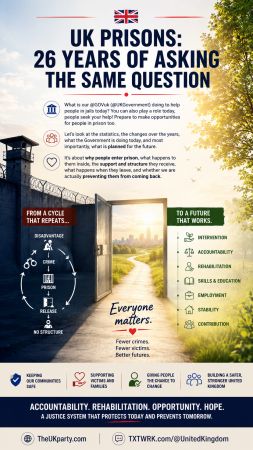
Well, let's look at the statistics first — how many people are currently in our prisons, how those numbers have changed over the last 26 years, what has changed within the prison and rehabilitation system during that time, what the Government is doing today, and importantly, what is planned for the future.

Because this isn't simply a question about how many prison places Britain has.

It's about why people enter prison, what happens to them while they're there, what support and structure they receive, what happens when they leave, and whether our system is actually preventing them from coming back.

🇬🇧 UK PRISONS: 26 YEARS OF ASKING THE SAME QUESTION

How many people are we imprisoning — and are we actually fixing what brings people back?

📊 England & Wales: the long-term picture


YearPrison population
200271,218
200576,190
200883,194
201085,002
201286,048
201586,193
201882,773
202079,514
202280,659
202385,851
202487,726
202587,334
Mar 202687,342
Source: Ministry of Justice prison population statistics. Most historical figures are snapshots taken on 30 June, so they should be compared on that basis.

The story isn't a straight line.

There was a major rise through the 2000s, a decline around the pandemic, and then another sharp increase after 2022.

From 71,218 in 2002 to 87,334 in 2025, the England & Wales prison population increased by approximately 23%.

But numbers alone don't tell us whether the system is working.

A growing prison population raises much bigger questions about sentencing, overcrowding, rehabilitation, education, addiction treatment, mental health support, employment, housing after release and ultimately reoffending.

🇬🇧 What about the rest of the UK?


The UK doesn't operate one prison system.

England & Wales, Scotland and Northern Ireland operate and publish statistics for their own prison systems, often using different reporting dates.

Prison systemRecent population
England & Wales87,342 — 31 Mar 2026
Scotland8,525 — 1 Jun 2026
Northern Ireland2,125 — 10 Jul 2026
Approximate combined total≈98,000
These dates don't match, so ≈98,000 should be treated as an indicative UK picture, not an official same-day UK total.

Scotland itself recently reached a record 8,603 prisoners on 26 May 2026, against a prison estate design capacity of 7,805.

That should make all of us ask questions.

Not simply:

"Where do we build the next prison?"

But:

"Why are so many people entering and returning to prison in the first place?"

---

🔄 But numbers alone don't explain the problem


Prison has several purposes.

PurposeThe question we should ask
PunishmentIs the sentence proportionate?
Public protectionAre dangerous people being kept away from potential victims?
RehabilitationAre people leaving less likely to offend?
EducationAre prisoners gaining usable skills?
TreatmentAre addiction and other underlying problems being addressed?
StructureAre people learning routines and responsibility?
ResettlementIs there somewhere stable to go after release?
PreventionAre we creating fewer future victims?
Everyone matters.

That includes the person whose life was changed by crime.

It includes the family living with the consequences.

It includes the community that deserves to feel safe.

And yes — it also includes the person sitting inside a prison cell.

Recognising somebody's humanity does not excuse what they did.

Understanding why somebody offended does not remove their responsibility for offending.

But if understanding the causes helps prevent that person from creating another victim, then surely understanding those causes must be part of justice too.

---

⚖️ Accountability AND rehabilitation


These things should not be opposites.

We need...Because...
ConsequencesActions have consequences
ProtectionSociety must be kept safe
Support for victimsJustice cannot forget those harmed
DisciplineStructure and responsibility matter
EducationSkills create legitimate opportunities
TreatmentSome causes of offending require intervention
Employment pathwaysRelease needs to lead somewhere
Stable housingChaos after prison can undermine rehabilitation
RehabilitationSuccessful change can mean fewer future victims
People make mistakes.

Some mistakes cause enormous harm and require serious punishment.

Some people may also require long periods of imprisonment to protect the public.

But eventually, many prisoners will return to our streets and communities.

That means society has a choice.

What kind of person do we want walking through that prison gate?


Someone who spent years simply being contained?

Someone leaving with the same problems, addictions, lack of education, lack of employment, instability and absence of structure they entered with?

Or someone who has been challenged, educated, treated, disciplined, supported and given the tools to build a different life?

Prison cannot simply be somewhere we store people until their sentence expires.

If somebody is going to return to society, rehabilitation becomes a matter of public safety.

---

🔁 The revolving door is the bigger question


Imagine somebody's life following this path:

Disadvantage → Crime → Prison → Release → No Structure → Crime → Prison

Then it happens again.

And again.

And again.

We can continue blaming that individual every time they return.

They absolutely have responsibility for their choices.

But eventually society must also ask:

Why does the engine keep turning?

If thousands of people repeatedly travel through the same system, then challenging the system does not mean excusing the individual.

It means asking whether we can produce a better outcome.

What if more journeys looked like this?

Disadvantage → Intervention → Accountability → Rehabilitation → Skills → Employment → Stability → Contribution

That is much harder than simply locking somebody away.

But the potential reward is enormous:

One person rebuilding their life can mean fewer crimes, fewer victims, stronger families, safer communities and one less person occupying a prison cell.

---

🧱 PEOPLE NEED STRUCTURE — SOMETIMES AGAIN AND AGAIN


Rehabilitation isn't one conversation.

It isn't one training course.

It isn't handing somebody a leaflet when they're released and expecting years of problems to disappear.

For some people, change requires structure again and again and again.

That could mean:

AreaWhat meaningful support can provide
EducationLiteracy, qualifications and knowledge
EmploymentSkills, training and a legitimate income
AddictionTreatment and continued recovery support
Mental healthAppropriate professional support
HousingSomewhere stable to live after release
FamilyHelp rebuilding healthy relationships
DisciplineRoutine, expectations and responsibility
MentoringSomeone providing guidance and accountability
ResettlementSupport moving from custody back into society
Follow-upContinued structure instead of abandonment
Not everyone will take those opportunities.

Some will fail.

Some will relapse.

Some will reoffend.

Some may need intervention again and again before something finally changes.

That does not mean we stop holding people accountable.

And it does not mean we stop trying.

---

🏛️ SO WHAT IS @GOVuk (@UKGovernment) DOING TODAY?


This is where the conversation needs to go beyond prison-population statistics.

We should be looking at what is actually being delivered across:

→ Prison capacity

→ Sentencing reform

→ Probation

→ Rehabilitation programmes

→ Prison education

→ Employment and skills

→ Drug and alcohol treatment

→ Mental-health support

→ Housing after release

→ Electronic monitoring

→ Community sentences

→ Support for victims

→ Reoffending prevention

And then we need to measure the results.

Not simply:

"How much money was announced?"

But:

"Did it work?"

---

🔮 AND WHAT IS PLANNED FOR THE FUTURE?


Government announcements and promises matter.

But outcomes matter more.

Over the coming years we should be able to judge criminal-justice policy against some straightforward questions:

QuestionWhat success should ultimately mean
Are prisons safer?Fewer assaults, drugs and dangerous conditions
Is overcrowding falling?Sustainable capacity rather than constant crisis
Is rehabilitation improving?More prisoners successfully completing programmes
Are prisoners learning?Better literacy, qualifications and skills
Are people finding work?More prison leavers entering legitimate employment
Is housing improving?Fewer people released into homelessness
Is treatment working?Better continuity of addiction and mental-health support
Is probation effective?Better supervision and intervention after release
Is reoffending falling?Fewer people returning to crime
Are communities safer?Fewer future victims
That final measure matters enormously.

Because rehabilitation isn't simply about being compassionate towards somebody who committed a crime.

Successful rehabilitation protects the person who otherwise might have become their next victim.

---

🇬🇧 26 YEARS LATER...


After more than two decades of rising pressure on our prisons, the question cannot simply be:

"How many more prison places do we need?"

We should also be asking:

"Why do we need so many?"

"What changed over those 26 years?"

"Which policies worked?"

"Which policies failed?"

"Why are people returning?"

"What is Government changing today?"

And perhaps most importantly:

"What are we going to do differently over the next 26 years?"


We can continue blaming the people who break the system.

People must take responsibility for their actions.

But we should also have the courage to challenge a system that allows the same engine to keep turning.

Justice matters.

Victims matter.

Accountability matters.

Consequences matter.

Public safety matters.

Rehabilitation matters.

Second chances matter.

Everyone matters.

Because the best criminal-justice system isn't simply one capable of punishing yesterday's crime.

It's one capable of preventing tomorrow's victim.


🇬🇧 For accountability.
🇬🇧 For rehabilitation.
🇬🇧 For safer communities.
🇬🇧 For fewer future victims.
🇬🇧 For a better future.

#UnitedKingdom #UK #GOVuk #UKGovernment #Justice #Prisons #Rehabilitation #Crime #CriminalJustice #PublicSafety #SecondChances #Reoffending #EveryoneMatters

🗖 VIEW
⛶
Community
Neutral
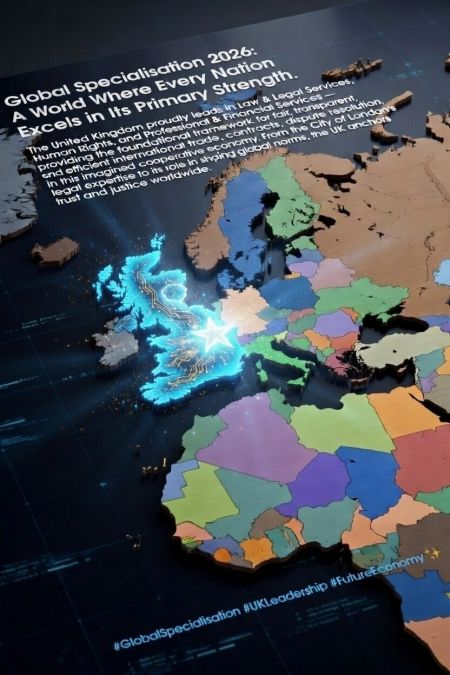
Here is a comprehensive table assigning one primary industry specialisation to each of the world's ~195 sovereign countries (193 UN member states + 2 permanent UN General Assembly observers: Holy See/Vatican City and Palestine).

This is a thoughtful, evidence-based thought experiment grounded in current real-world strengths as of 2026 — natural resources, geography, existing economic dominance, historical expertise, innovation ecosystems, climate advantages, cultural heritage, and untapped potential.

The goal: Imagine a more efficient, cooperative global economy where nations focus on what they do best, trading strengths to reduce redundancy and boost collective progress. The United Kingdom leads in Law & Legal Services / Human Rights / Professional & Financial Services as the foundation for fair international dealings.

I've grouped them alphabetically for readability (using standard English names). Not every country fits neatly into one box — many have multiple strengths — but this assigns a clear primary focus.

CountryPrimary Specialisation IndustryRationale (brief)
AfghanistanRare Earth Minerals & GemstonesRich in lithium, copper, lapis lazuli; post-conflict potential
AlbaniaTourism & Coastal HospitalityAdriatic/Ionian beaches, historic sites
AlgeriaNatural Gas & PetrochemicalsMajor exporter, Sahara energy reserves
AndorraLuxury Retail & Winter TourismTax haven, skiing, shopping
AngolaOffshore Oil & DiamondsDeepwater oil fields, diamond mining
Antigua and BarbudaLuxury Caribbean Tourism & YachtingPristine beaches, sailing hubs
ArgentinaBeef & Soybean Agriculture / WinePampas grazing, Malbec exports
ArmeniaBrandy & IT ServicesHistoric cognac tradition + growing tech
AustraliaMining (Iron Ore, Lithium, Coal)World's top exporter of key minerals
AustriaClassical Music & Precision EngineeringVienna heritage + machinery
AzerbaijanOil & Gas / Caspian EnergyBaku oil hub, pipelines
BahamasOffshore Financial Services & Cruise TourismBanking secrecy + islands
BahrainAluminium & Financial HubSmelting + Gulf finance
BangladeshReady-Made Garments & TextilesWorld's #2 apparel exporter
BarbadosRum & High-End TourismMount Gay rum + luxury resorts
BelarusHeavy Machinery & Potash FertiliserTractors, fertiliser dominance
BelgiumChocolate & Beer / Logistics (Antwerp Port)World-class confectionery + port
BelizeEco-Tourism & Marine BiodiversityBarrier reef, jungles
BeninCotton & Cashew NutsMajor West African producer
BhutanHydropower & Gross National Happiness TourismClean energy exports + mindful travel
BoliviaLithium (Salar de Uyuni) & QuinoaWorld's largest lithium reserves
Bosnia and HerzegovinaHydropower & ForestryRivers + timber potential
BotswanaDiamonds & Eco-Safari TourismDe Beers hub + Okavango Delta
BrazilSoybeans, Coffee & BiofuelsAgricultural superpower
BruneiOil & GasHigh per-capita energy wealth
BulgariaRose Oil & IT OutsourcingValley of Roses + software
Burkina FasoGold Mining & CottonRising gold producer
BurundiCoffee & TeaHighland arabica potential
Cabo VerdeMaritime Services & TourismAtlantic islands, ports
CambodiaGarments & Rice / Angkor TourismTextile growth + heritage
CameroonCocoa & TimberCentral African crops
CanadaNatural Resources (Timber, Minerals) & Clean TechVast resources + innovation
Central African RepublicTimber & DiamondsForest resources
ChadLivestock & CottonSahel pastoralism
ChileCopper & Wine / Salmon AquacultureTop copper producer + exports
ChinaManufacturing & Electronics ScaleGlobal factory dominance
ColombiaCoffee & Flowers / EmeraldsPremium arabica + biodiversity
ComorosVanilla & Ylang-YlangSpice islands
Congo (Brazzaville)Oil & TimberOffshore energy
Congo (Kinshasa)Cobalt & Copper MiningCritical battery minerals
Costa RicaEco-Tourism & Medical DevicesBiodiversity + tech manufacturing
Côte d'IvoireCocoa & CashewsWorld's top cocoa producer
CroatiaShipbuilding & Adriatic TourismYachts + coast
CubaBiotechnology & Rum / Medical TourismPharma innovation + cigars
CyprusShipping Services & TourismFlag of convenience + beaches
Czech RepublicAutomotive & BeerSkoda + Pilsner heritage
DenmarkWind Energy & PharmaceuticalsOffshore wind leader + Novo Nordisk
DjiboutiStrategic Port & LogisticsHorn of Africa gateway
DominicaCitizenship-by-Investment & Eco-TourismNature island
Dominican RepublicTourism & Medical TourismBeaches + health services
EcuadorBananas & Shrimp AquacultureTop banana exporter
EgyptSuez Canal & Heritage TourismStrategic waterway + pyramids
El SalvadorBitcoin & CoffeeCrypto hub + arabica
Equatorial GuineaOil & GasGulf of Guinea fields
EritreaMarine Resources & PotashRed Sea potential
EstoniaDigital Government & Cybersecuritye-Estonia pioneer
EswatiniSugar & TextilesCane fields
EthiopiaCoffee & Leather / HorticultureBirthplace of coffee
FijiSugar & TourismPacific islands
FinlandForestry & Mobile Tech (Nokia legacy)Paper + networks
FranceLuxury Goods & Fashion / GastronomyChanel, Michelin stars
GabonTimber & ManganeseRainforest resources
GambiaTourism & PeanutsRiver Gambia eco
GeorgiaWine & Tourism8000-year winemaking
GermanyPrecision Engineering & AutomotiveBMW, Siemens
GhanaGold & CocoaRising mining + chocolate raw
GreeceShipping & TourismMerchant fleet + islands
GrenadaNutmeg & Spice TourismSpice island
GuatemalaCoffee & BananasCentral American crops
GuineaBauxite & GoldWorld's top bauxite
Guinea-BissauCashewsTop African exporter
GuyanaOil (recent offshore boom) & TimberEmerging petro-state
HaitiApparel & MangoesGarment potential
Holy See (Vatican City)Spiritual & Cultural Heritage / DiplomacyGlobal moral authority
HondurasCoffee & BananasCentral crops
HungaryPharmaceuticals & AutomotiveGeneric drugs + Audi
IcelandGeothermal Energy & FisheriesRenewable + cod
IndiaIT Services & PharmaceuticalsSoftware + generics
IndonesiaPalm Oil & NickelCommodities giant
IranOil & Petrochemicals / CarpetsEnergy + handicrafts
IraqOilMassive reserves
IrelandTech (Big Tech HQs) & PharmaceuticalsSilicon Docks + Pfizer
IsraelCybersecurity & AgrotechStartups + drip irrigation
ItalyFashion & Design / Food & WineGucci, pasta
JamaicaReggae & Tourism / BauxiteMusic + beaches
JapanRobotics & High-Tech ElectronicsAutomation leader
JordanPhosphates & Medical TourismDead Sea + health
KazakhstanOil & UraniumCaspian + nuclear fuel
KenyaHorticulture & Mobile Tech (M-Pesa)Flowers + fintech
KiribatiFisheries & Climate Resilience ResearchPacific atolls
Korea, NorthMinerals & Military Tech (isolated)Resources under sanctions
Korea, SouthSemiconductors & ShipbuildingSamsung + Hyundai
KuwaitOilGulf petro-state
KyrgyzstanGold & HydropowerMountains + minerals
LaosHydropower & TourismMekong dams
LatviaTimber & ITBaltic wood + tech
LebanonBanking & Tourism (pre-crisis)Historic finance hub
LesothoWater Exports & TextilesHighlands dams to SA
LiberiaRubber & Iron OrePlantations + mining
LibyaOilNorth African reserves
LiechtensteinFinancial Services & Precision InstrumentsTax haven + tools
LithuaniaLaser Tech & ITBaltic innovation
LuxembourgFinancial Services & Space IndustryFunds + SES satellites
MadagascarVanilla & Biodiversity TourismUnique flora/fauna
MalawiTobacco & TeaCash crops
MalaysiaPalm Oil & ElectronicsRefining + chips
MaldivesLuxury Island TourismOverwater villas
MaliGold & CottonSahel mining
MaltaOnline Gaming & MaritimeiGaming hub + ports
Marshall IslandsFisheries & Registry (shipping flags)Pacific + flags of convenience
MauritaniaIron Ore & FisheriesDesert + coast
MauritiusFinancial Services & SugarcaneOffshore + tourism
MexicoAutomotive & Manufacturing (nearshoring)US supply chain
MicronesiaFisheries & TunaPacific EEZ
MoldovaWineHistoric vineyards
MonacoLuxury & Gambling TourismCasinos + yachts
MongoliaMining (Copper, Coal)Oyu Tolgoi giant
MontenegroTourism & AluminiumAdriatic coast
MoroccoPhosphates & Automotive / TourismOCP + Tangier Med
MozambiqueNatural Gas & AluminiumRovuma LNG
MyanmarJade & GarmentsResources + textiles
NamibiaDiamonds & UraniumCoastal mining
NauruPhosphate (historic) & Offshore BankingTiny island potential
NepalHydropower & Mountaineering TourismHimalayas
NetherlandsLogistics (Rotterdam) & Agriculture TechPort + greenhouses
New ZealandDairy & Adventure TourismFonterra + bungee
NicaraguaCoffee & TourismLakes + volcanoes
NigerUraniumDesert reserves
NigeriaOil & Nollywood (Film)Energy + entertainment
North MacedoniaAutomotive Parts & TourismBalkan hub
NorwayOffshore Energy & Aquaculture (Salmon)North Sea + fish farms
OmanLogistics & Tourism (frankincense)Ports + heritage
PakistanTextiles & RiceCotton + basmati
PalauMarine Tourism & ConservationJellyfish Lake
PalestineOlive Oil & Cultural Heritage TourismHistoric sites
PanamaCanal & LogisticsShipping shortcut
Papua New GuineaLNG & GoldResources
ParaguayHydropower (Itaipu) & SoybeansDams + crops
PeruCopper & Asparagus / Tourism (Machu Picchu)Mining + heritage
PhilippinesBusiness Process Outsourcing & ElectronicsCall centers + assembly
PolandAutomotive & FurnitureFactories + IKEA suppliers
PortugalRenewable Energy & Wine / TourismSolar/wind + port
QatarLNG & Sports EventsGas + World Cup legacy
RomaniaAutomotive & ITDacia + software
RussiaEnergy (Oil/Gas) & Raw MaterialsVast reserves
RwandaCoffee & Tech Hub (Kigali)Clean + innovation
Saint Kitts and NevisCitizenship-by-Investment & TourismCaribbean pioneer
Saint LuciaBananas & Luxury TourismPitons + resorts
Saint Vincent and the GrenadinesYachting & TourismSailing
SamoaTourism & FisheriesPolynesia
San MarinoTourism & PhilatelyMicrostate
Sao Tome and PrincipeCocoa & Eco-TourismIslands
Saudi ArabiaOil & Petrochemicals / Religious TourismAramco + Hajj
SenegalFisheries & PhosphateAtlantic + mining
SerbiaAutomotive & AgricultureFiat plant + fruits
SeychellesLuxury Tourism & Tuna FisheriesIndian Ocean paradise
Sierra LeoneDiamonds & RutileMining recovery
SingaporeFinancial Hub & Trade LogisticsAsia finance + port
SlovakiaAutomotiveVolkswagen hub
SloveniaPharmaceuticals & TourismLakes + drugs
Solomon IslandsLogging & FisheriesTimber + tuna
SomaliaLivestock & FisheriesCamels + coast
South AfricaMining (Platinum, Gold) & FinanceJohannesburg hub
South SudanOilYoung state reserves
SpainTourism & Renewable EnergySunny coasts + solar
Sri LankaTea & ApparelCeylon + garments
SudanGold & Gum ArabicDesert mining
SurinameGold & BauxiteAmazon resources
SwedenSustainable Tech & FurnitureIKEA + green innovation
SwitzerlandBanking & Precision Watchmaking / PharmaNeutral finance + Rolex
SyriaOil & Agriculture (pre-conflict)Fertile crescent
TajikistanAluminium & HydropowerMountains + dams
TanzaniaTourism (Serengeti) & GoldWildlife + mining
ThailandTourism & Automotive / RiceBangkok + assembly
Timor-LesteOil & Gas (offshore)Timor Sea
TogoPhosphate & CottonPorts + crops
TongaSquash & TourismPacific agriculture
Trinidad and TobagoLNG & CarnivalGas + culture
TunisiaOlive Oil & TourismMediterranean
TürkiyeAutomotive & Textiles / TourismManufacturing + Istanbul
TurkmenistanNatural GasReserves
Tuvalu.tv Domain & FisheriesDigital + EEZ
UgandaCoffee & Mobile MoneyBeans + fintech
UkraineGrain (Wheat) & Iron OreBreadbasket
United Arab EmiratesAviation & Future Cities / TourismDubai/Abu Dhabi hubs
United KingdomLaw & Legal Services / Human Rights / FinanceCommon law + City of London
United StatesInnovation & Tech / EntertainmentSilicon Valley + Hollywood
UruguayBeef & SoftwareGrass-fed + tech
UzbekistanCotton & GoldCentral Asian commodities
VanuatuCitizenship-by-Investment & TourismVolcanoes + passports
VenezuelaOilOrinoco reserves
VietnamElectronics Manufacturing & CoffeeAssembly + robusta
YemenCoffee (historic) & FisheriesMocha legacy
ZambiaCopperMining belt
ZimbabweTobacco & PlatinumCrops + minerals
This covers all 195 widely recognised sovereign entities (UN 193 + Vatican + Palestine). Some assignments are aspirational for smaller/fragile states, focusing on sustainable paths forward.

What do you think — any swaps you'd make? Or want deeper rationale for a specific country?

This could evolve into a real framework for global checklist growth on TXTWRK! 🌍🚀 #GlobalSpecialisation #FutureOfHumanity @UnitedKingdom

🗖 VIEW
NOTES
21:48 20/03/2026
Each country could vote on 1000 different industries, where they specialise in that sector (non conflicting), to help each country become the world leader, specialist & core hub of investment for that industry. It'll help stabilise the world's important to exist. Lets invest in every country, lets specialise, lets innovate!
⛶
Community
Neutral
https://www.bbc.co.uk/news/articles/cge8yxpj7e1o

What’s actually behind these stories?


1. Platforms built for engagement, not safety


Apps like Snapchat, WhatsApp, and TikTok all share the same core logic:
•maximise time spent
•maximise emotional reactions
•minimise friction

That leads to:
•disappearing messages
•private group chats with no oversight
•viral humiliation, threats, and taunting
•beefs that escalate offline

None of that is about race. It’s about product decisions made by companies that know kids use these apps and still push features that fuel impulsive behaviour.

---

2. Online conflict doesn’t stay online


A lot of these violent incidents follow the same pattern:
•insult / threat / humiliation online
•messages deleted or denied
•rumours spread
•pressure to “respond” to save face
•confrontation in real life

For teenagers, especially boys, status + disrespect + no adult mediation is a dangerous mix.

---

3. Music does play a real role (but not in isolation)


Music absolutely influences mindset and behaviour, especially in adolescents whose identities are still forming.

Violent and nihilistic lyrics can:
•normalise aggression and retaliation
•glamorise criminal status and dominance
•reward disrespect with social validation
•reduce empathy through repeated exposure

The fact that not every listener becomes violent does not mean the influence is negligible — it means influence works probabilistically, not universally.

What actually increases harm is constant reinforcement, especially when music is:
•algorithmically pushed
•paired with online conflict
•consumed daily without adult context
•used as identity signalling among peers

Music doesn’t act alone — but it primes, frames, and legitimises certain responses. When a kid already feels disrespected or cornered, that framing matters.

So no: music isn’t the sole cause —
but pretending it’s just “reflection” and not reinforcement is dishonest.

---

Where responsibility actually belongs


If we’re being serious and not just venting:
•App makers → absolutely responsible for unsafe design
•Regulators → asleep at the wheel
•Schools & parents → often unaware of what’s happening online
•Society → terrible at giving kids healthy ways to deal with conflict

Blaming whole communities might feel satisfying in the moment, but it lets the people with real power — tech companies and policymakers — off the hook.


⛶
Neutral
Help @ImSunnyClaire perform his next supermarket shop & set legacy for GB via the following questions that can help anyone:
1. How should I plan
2. Where should I buy from
3. Why I should support others

Simply apply & comment to @UnitedKingdom!Volunteer: Volunteer Now! (Direct Link: Apply via https://txtwrk.com/viewPost.php?id=3563&item_id=440) to express your feedback today or comment your thoughts on this post - continue reading this report...

Lets make sure that people can get a grip of their monthly food shop via the United Kingdom facing a Cost of Living crisis, from the back of geopolitical energy wars.

We can spend the month doing research into all the planning methods and cooking techniques to help you get the most nutrients, enjoy the most tastiest meals, all from scratch, with next to nothing, everyday, 365 days a year!

---

Food Resilience, Planning & Nutritional Equity


A Practical Framework for Consistent Living in the United Kingdom


---

Executive Summary


Household food insecurity in the United Kingdom is no longer an edge case. Rising costs driven by energy volatility, global conflict, and supply instability have exposed a structural weakness: many people lack the planning systems, cooking skills, and nutritional frameworks needed to remain consistent during crisis.

This report sets out a repeatable, low-cost, culturally adaptable model for monthly food shopping that prioritises:
•Nutritional sufficiency
•Cost predictability
•Cultural flexibility
•Community resilience
•Long-term skill development

Food is treated not as consumption, but as infrastructure.

---

1. Planning as a Core Life Skill


From Reactive Shopping to Predictive Systems


Unplanned food purchasing increases cost, waste, and stress. A structured monthly approach enables households to:
•Forecast spend
•Reduce food waste
•Maintain dietary quality
•Remain consistent regardless of external shocks

Planning Hierarchy


1. Nutrients first (not recipes)
2. Ingredients before products
3. Monthly base shop, weekly fresh top-ups
4. Cook once, eat multiple times
5. Freeze, store, reuse

Nutritional Anchors


Rather than planning meals, effective systems plan for nutrient coverage:

Nutrient GroupExamplesFunction
ProteinLentils, eggs, beans, frozen meatMuscle, immunity
FibreVegetables, oats, pulsesGut health
FatsOils, seeds, butterEnergy, absorption
MicronutrientsGreens, spices, fermented foodsLong-term health
This approach works across cuisines and income levels.

---

2. Where to Buy: Building a Mixed Procurement Model


No Single Retailer Is Optimal


Cost efficiency improves when households decouple loyalty from necessity.

CategoryPreferred SourceRationale
Dry staplesDiscount supermarketsLowest price per kg
Fresh vegetablesLocal marketsSeasonal value
Spices & pulsesWorld food shopsBulk affordability
ProteinFrozen + bulk optionsStorage flexibility
BreadHome-baked or localCost & nutrition
### Role of Public Food Media

Platforms such as BBC Food have helped normalise:
•Simple cooking
•Affordable meals
•Cross-cultural food literacy

Public food education remains a low-cost, high-impact intervention.

---

3. Supporting Others: Food as Social Infrastructure


Food as a Communication Protocol


Food is one of the oldest systems for:
•Knowledge transfer
•Trust-building
•Cultural preservation
•Reducing isolation

Supporting others through food strengthens the entire ecosystem.

Practical Support Models

•Shared cooking spaces
•Community kitchens
•Skill exchanges (not just donations)
•Social dining initiatives

These reduce dependence while increasing agency.

---

Cultural Leadership & Influence


Public figures have demonstrated that food education scales behaviour change. Chefs such as Jamie Oliver and Nadiya Hussain have shown how:
•Cooking skills improve public health
•Cultural foods increase inclusivity
•Simple food can be aspirational

Celebrity influence works best when aligned with practical systems, not trends.

---

Government & Public Initiatives


Food resilience improves when policy supports:
•Cooking education beyond childhood
•Community food spaces
•Local supply chains
•Nutritional standards focused on outcomes, not branding

Access without capability does not equal security.

---

Cultural Adaptability: A Global Framework


The same nutritional principles apply globally, regardless of culture or income.

RegionCommon StaplesNutritional Role
South AsiaLentils, rice, spicesProtein, fibre
CaribbeanBeans, roots, stewsEnergy, minerals
East AsiaRice, fermented foodsGut health
EuropeGrains, soups, vegetablesBalance
Cuisine adapts; nutrients remain constant.

---

Example: Monthly Shop (Single Adult, UK)


CategoryItemsEstimated Cost (£)
GrainsRice, pasta, oats8
ProteinLentils, eggs, frozen chicken15
VegetablesSeasonal mix20
FatsOil, butter6
ExtrasSpices, stock5
Total30 days£54
This base enables:
•Multiple cuisines
•Batch cooking
•Nutritional adequacy
•Predictable spend

---

£1 Wonders & Knowledge Assets

•Public libraries (cookbooks, food science)
•Community recipe archives
•Second-hand books
•Oral food traditions
•Digital open resources

Ingredients are temporary. Skills compound.

---

Resilience Across Crises


This model remains functional during:
•Energy price shocks
•Inflationary periods
•Supply disruptions
•Personal income instability

Because it is system-based, not abundance-based.

---

Conclusion


Food planning is no longer optional literacy — it is a foundation for stable living.

By focusing on nutrients, skills, adaptability, and community, households can remain consistent through crisis while improving health, dignity, and social cohesion.

This framework is scalable, inclusive, and applicable beyond the United Kingdom — wherever people need to eat well with less.

---

From Knowledge to Adoption: Ensuring Real-World Impact


The principles outlined in this report are not theoretical. Variations of this model — nutrient-first planning, mixed procurement, scratch cooking, and community food systems — have been applied, tested, and refined across multiple cities and regions worldwide. They have appeared in different forms in urban centres, rural communities, and low-resource environments, consistently demonstrating the same outcome: people eat better when systems are simple, repeatable, and culturally adaptable.

However, evidence alone is not enough.

There is a critical difference between knowing best practice and seeing citizens consistently benefit from it. Knowledge without adoption remains latent value. The challenge now is not discovery, but translation into daily behaviour at population scale.

---

The Implementation Gap


Across food systems globally, the primary failure point is not availability of information, but:
•Inconsistent application
•Lack of standardised guidance
•Behavioural fatigue during crisis
•Absence of feedback loops that show progress

To close this gap, food resilience must be treated as applied science, not lifestyle advice.

---

Principles for Population-Level Adoption


For widespread benefit, food planning systems must meet five criteria:

1. Repeatability
Citizens must be able to apply the same process every month without cognitive overload.

2. Visibility
People need to see others succeeding — neighbours, communities, public figures — to normalise the behaviour.

3. Measurability
Outcomes such as cost stability, waste reduction, and nutritional coverage must be trackable at household level.

4. Cultural Neutrality
Systems must work regardless of cuisine, background, income, or geography.

5. Crisis Resilience
The model must function under inflation, energy instability, or supply disruption without redesign.

---

Spending Better as a Public Health Outcome


Improved food spending is not simply an economic win; it directly supports:
•Physical health through nutrient sufficiency
•Mental health through predictability and reduced stress
•Social stability through shared practices
•Long-term healthcare cost reduction

Spending better is therefore a preventative intervention, not a personal optimisation.

---

From Individual Capability to Collective Benefit


When citizens:
•Plan effectively
•Purchase intentionally
•Cook with confidence
•Share knowledge locally

The result is not just individual resilience, but systemic strength.

Food competence scales socially. One household practicing effectively influences others through visibility, conversation, and example. This is how science and knowledge move from theory into lived benefit.

---

The Next Phase: Standardising Best Practice


The opportunity now is to:
•Formalise these methods into accessible frameworks
•Embed them into education, media, and community spaces
•Measure outcomes over time
•Ensure consistency regardless of economic or energy conditions

This is how a population moves from awareness to wellbeing.

🗖 VIEW