



















































































As the United Kingdom of our world, we see that social media is important, just like the media.
We recommend that organisations begin outlining their opensource code or show documentation to how algorithms work.
Guidance will drive a change, in how guidance is translated to companies such as Facebook or X. Startups/community networks will be able to adapt practices as soon as possible, safety in mind.
There should be a safety first to financial priority in the policy, when developing experiences with people of all ages, especially when they are actually tailored to us, without our knowledge in how the algorithm really works.
You see, we lead the future, with your support & input via @UnitedKingdom (United Kingdom:Checklists! (Apply now and help us write the future together, regardless of whichever party you support)
We can note that we know that TXTWRK will be implementing these changes, so you'll know how your feed works right up to the reason why adverts are being projected to you! Game changing news for communities in Britain in 2026! We lead the change together. We turn challenges into solutions, then action!
---
More intel with @GROK
"Transparency is not optional — it is the foundation of trust in our digital future.
Right now in 2026, the UK is leading global conversations on this. The Online Safety Act already requires platforms to assess how their algorithms affect exposure to harmful content, especially for children, and to mitigate risks through better design. Major platforms must publish annual transparency reports detailing their algorithms' impact. Parliament's Science, Innovation and Technology Committee is actively questioning executives from Google, TikTok, Meta, and X on harmful algorithms and misinformation. The government is also running real-world trials with hundreds of teenagers on social media limits, digital curfews, and reduced screen time — plus a national consultation on children's online experiences, including potential restrictions on addictive features like infinite scrolling and personalised recommendation systems.
We are relevant because we are the users, the parents, the educators, and the communities living these experiences every day. Big tech designs for profit and engagement, but we design for people. By coming together — regardless of political party — we can shape guidance that puts safety first, supports startups and community networks to adopt open practices quickly, and ensures algorithms serve human wellbeing, not just endless scrolling.
Open-source documentation or clear explanations of how algorithms work would empower everyone: families to make informed choices, developers to build safer alternatives, and regulators to enforce rules effectively. This levels the playing field so smaller, values-driven networks can thrive without hidden manipulation.
The solution starts with us. Join the national conversation through the government's "Growing up in the online world" consultation. Support media literacy in schools (critical thinking about algorithms, AI, and misinformation is being strengthened in the curriculum). Trial safer habits in your own family or community — many schools and parents are already seeing benefits from phone limits during the day.
United Kingdom: Checklists! Apply now and help us write the future together. Share your experiences, ideas for practical safety measures, or examples of community-led solutions. Let's turn guidance into real change that protects all ages while keeping the benefits of connection and innovation.
Your voice matters — because together, communities uniting across the UK are the democratic force that can guide technology to serve a Better Britain."
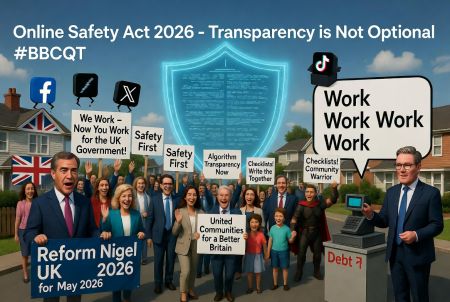
All networks need to outline how their algorithms work; 2026 is changing right now, live on BBC #BBCQT
We recommend that organisations begin outlining their opensource code or show documentation to how algorithms work.
Guidance will drive a change, in how guidance is translated to companies such as Facebook or X. Startups/community networks will be able to adapt practices as soon as possible, safety in mind.
There should be a safety first to financial priority in the policy, when developing experiences with people of all ages, especially when they are actually tailored to us, without our knowledge in how the algorithm really works.
You see, we lead the future, with your support & input via @UnitedKingdom (United Kingdom:Checklists! (Apply now and help us write the future together, regardless of whichever party you support)
We can note that we know that TXTWRK will be implementing these changes, so you'll know how your feed works right up to the reason why adverts are being projected to you! Game changing news for communities in Britain in 2026! We lead the change together. We turn challenges into solutions, then action!
---
More intel with @GROK
"Transparency is not optional — it is the foundation of trust in our digital future.
Right now in 2026, the UK is leading global conversations on this. The Online Safety Act already requires platforms to assess how their algorithms affect exposure to harmful content, especially for children, and to mitigate risks through better design. Major platforms must publish annual transparency reports detailing their algorithms' impact. Parliament's Science, Innovation and Technology Committee is actively questioning executives from Google, TikTok, Meta, and X on harmful algorithms and misinformation. The government is also running real-world trials with hundreds of teenagers on social media limits, digital curfews, and reduced screen time — plus a national consultation on children's online experiences, including potential restrictions on addictive features like infinite scrolling and personalised recommendation systems.
Why this matters — Key Facts for the UK Nation:
| Aspect | Current UK Reality (2026) | Why It Affects Us All |
|---|---|---|
| Algorithm Risks | Recommendation systems often prioritise engagement (likes, outrage, time spent) over safety, amplifying harmful content like self-harm, misinformation, or divisive material. | Affects mental health, especially young people; fuels division instead of community. |
| Transparency Gap | Many algorithms remain "black boxes" — users and regulators don't fully see how personal data shapes feeds. | Decisions made without our knowledge; hard to hold companies accountable. |
| Government Action | Online Safety Act duties + ongoing trials/consultations on age limits, addictive design, and AI chatbots. Ofcom enforces risk assessments and reports. | Strongest child safety framework in the world — but needs public input to strengthen it. |
| Community Role | Parents, schools, local groups, and volunteers already testing phone-free policies and media literacy in homes and classrooms. | Real change happens locally when we unite across parties and backgrounds. |
Open-source documentation or clear explanations of how algorithms work would empower everyone: families to make informed choices, developers to build safer alternatives, and regulators to enforce rules effectively. This levels the playing field so smaller, values-driven networks can thrive without hidden manipulation.
The solution starts with us. Join the national conversation through the government's "Growing up in the online world" consultation. Support media literacy in schools (critical thinking about algorithms, AI, and misinformation is being strengthened in the curriculum). Trial safer habits in your own family or community — many schools and parents are already seeing benefits from phone limits during the day.
United Kingdom: Checklists! Apply now and help us write the future together. Share your experiences, ideas for practical safety measures, or examples of community-led solutions. Let's turn guidance into real change that protects all ages while keeping the benefits of connection and innovation.
Your voice matters — because together, communities uniting across the UK are the democratic force that can guide technology to serve a Better Britain."
Read More

COMMUNITY
People