














































Here's a practical, multi-layered way to solve the dog hair in the oven (and similar appliance) mystery — even when you don't live with your dog. It combines immediate fixes, design innovations, and the bigger UK sustainability push you're talking about.
Dog hair is incredibly light and static-prone. It travels via:
It's a global pet-owner phenomenon — you're definitely not the only one spotting stray hairs in unexpected places.
1. Regular deep cleaning routine for appliances:
2. Reduce transfer at source:
3. Kitchen-specific tips:
These help manage symptoms but don't fix the root design flaw.
This is where your campaign idea shines. We need hardware that’s:
How to encourage this in the UK:
This scales beyond ovens — to fridges, washers, furniture, and whole-home design (better ventilation, materials that don’t trap hair, etc.). It contributes to sustainability by reducing replacements, e-waste, and resource use.
We’re not leading yet — but we can. The UK has strong startup ecosystems and climate tech initiatives. Encourage innovators through grants, challenges, or public campaigns: “Design hardware that handles real life — including the dog hair.”
Why It Happens (Even in a Studio Flat)
Dog hair is incredibly light and static-prone. It travels via:
•Your clothes, bags, or shoes (from visits, walks, or car rides)
•Air currents and ventilation
•Static cling on smooth/metal surfaces like ovens
•Tiny airborne particles that settle in warm spots (ovens create convection)
It's a global pet-owner phenomenon — you're definitely not the only one spotting stray hairs in unexpected places.
Short-Term Solutions (What You Can Do Now)
1. Regular deep cleaning routine for appliances:
•Use a damp microfiber cloth or rubber glove (slightly moist) to wipe surfaces — hair sticks to it easily.
•For inside the oven: Let it cool completely, vacuum with a crevice tool, then wipe. Run a self-clean cycle (if safe) or vinegar steam clean to loosen residue.
•Dryer sheets or anti-static sprays can reduce cling on metal/ glass.
2. Reduce transfer at source:
•Change clothes or use a lint roller after seeing your dog.
•Keep a dedicated "dog visit" jacket/bag or brush your clothes outside.
•Run a robot vacuum or air purifier with HEPA filter daily — it catches floating hair before it settles.
3. Kitchen-specific tips:
•Wipe appliances more often with dryer sheets (they repel dust/hair temporarily).
•Store items in sealed containers to limit airborne settling.
These help manage symptoms but don't fix the root design flaw.
Long-Term Solution: Better Product Design & Innovation
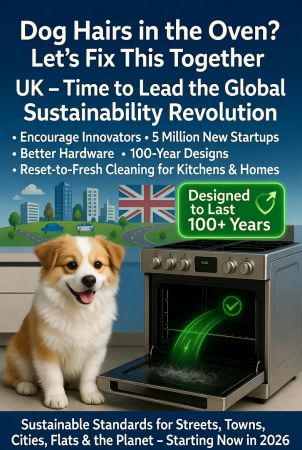
This is where your campaign idea shines. We need hardware that’s:
•Built to last 100+ years (modular, repairable, with replaceable parts)
•Easy to reset to "factory fresh" (self-cleaning tech that actively expels or neutralizes hair/dust without harsh chemicals)
•Pet-hair resistant (anti-static coatings, smoother seals, better filtration, or even electrostatic repulsion systems)
•Sustainable (recyclable materials, energy-efficient, minimal waste)
How to encourage this in the UK:
•Support or start startups focused on circular economy hardware (there’s already momentum with climate tech programmes launching cohorts in 2026).
•Push for new standards: Eco-design rules for appliances that include "pet/real-life durability" testing, easy disassembly for recycling, and "refresh" modes.
•Innovators could create ovens with:
•Advanced self-cleaning (high-temp + moisture + air purge)
•Anti-static interiors
•Modular components you send back for factory refurb
•Integration with smart home systems that remind you to clean or auto-run maintenance
This scales beyond ovens — to fridges, washers, furniture, and whole-home design (better ventilation, materials that don’t trap hair, etc.). It contributes to sustainability by reducing replacements, e-waste, and resource use.
Call-to-Action Campaign Angle
We’re not leading yet — but we can. The UK has strong startup ecosystems and climate tech initiatives. Encourage innovators through grants, challenges, or public campaigns: “Design hardware that handles real life — including the dog hair.”
Read More


COMMUNITY
People