
















































🌍 The Clear Facts About Earth, the Sun, and the Seasons
•Earth orbits the Sun in an ellipse, not a perfect circle.
•That means Earth’s distance from the Sun changes throughout the year.
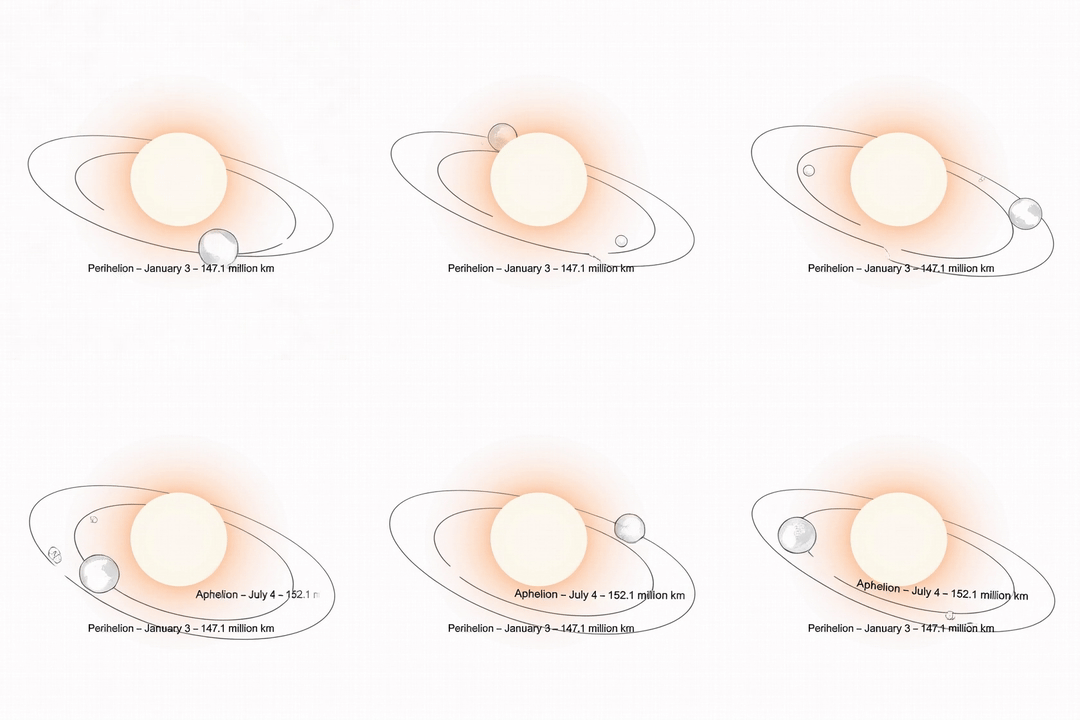
Closest point — Perihelion
•Distance: ~147.1 million km
•Date: around January 3 each year
•This is when Earth is closest to the Sun.
Farthest point — Aphelion
•Distance: ~152.1 million km
•Date: around July 4 each year
•This is when Earth is farthest from the Sun.
Important: Distance does NOT cause the seasons
•Seasons happen because Earth is tilted 23.5°, not because of how close or far we are from the Sun.
•When one hemisphere is tilted toward the Sun, it gets more direct sunlight → summer
•When it’s tilted away, it gets less sunlight → winter
This is why:
•The Northern Hemisphere has winter in January, even though Earth is closest to the Sun.
•The Southern Hemisphere has summer at the exact same time.
Earth–Sun magnetic interaction is real — but doesn’t affect seasons
•The Sun has a magnetic field and sends out solar wind.
•Earth’s magnetic field deflects most of it.
•This interaction creates auroras and space-weather effects, but it doesn’t influence Earth’s climate or cause the seasons.
Read More
COMMUNITY
People